


Introduction
A BLE sniffer is one of the most crucial tools that every Bluetooth developer should have on hand. There are many cases where the two communicating BLE devices seem to be doing everything right, but things are just not working right.. 😖 In these circumstances, a BLE sniffer can come in pretty handy!
So, what does a BLE sniffer do? How can it be helpful? What are the different options for BLE sniffers? Those are the exact questions we'll be addressing in this article.
What is a BLE sniffer? What does a BLE sniffer do?
A BLE sniffer (aka Bluetooth protocol analyzer) acts as a passive listening device that captures BLE packets sent over the air from various devices within the direct radio range.
Why do we call it "passive"? Because it does not interact with the BLE devices around it and instead simply captures the packets, meaning other BLE devices are unaware of its existence.
This can be very helpful, especially when you're interested in debugging communication between devices and without interfering and affecting the communication between these devices.
For example, when two Bluetooth LE devices connect to each other and something is not working correctly, you wouldn't want to interfere with the communication. Instead, passively capturing the packets exchanged between the devices will give you a better insight into the issues going on with the communication.
A BLE sniffer is helpful, not just for debugging!
Another important reason for getting familiar with and using a BLE sniffer is that it can help tremendously in learning how BLE works.
This is especially useful for new features that have just been released in recent versions of the Bluetooth specification.
How does a BLE sniffer work?
In general, a BLE sniffer captures packets in two main scenarios:
- Advertising mode: it captures advertising packets (mainly on the primary advertising channels 37, 38, and 39)
- Connection mode: it captures raw packet data exchanged between two Bluetooth LE devices during a connection (the remaining 37 channels: 0 through 36)
The way the sniffer accomplishes this primarily depends on its hardware implementation. There are two main types of sniffers:
1. Low-Cost Sniffers (Dev-Kit Based)
Advertising Capture
- Can only capture packets on one RF channel at a time
- Continuously switches between the three primary advertising channels (37, 38, and 39) to capture as many advertising packets as possible
- Will inevitably miss some packets, but the probability of capturing missed packets increases the longer the sniffer runs
Connection Capture
- Usually only capable of sniffing one connection at a given time
- Sniffs a connection by listening on the exact RF channel where the two communicating BLE devices exchange packets
- Connected BLE devices use frequency hopping — they exchange packets on a specific RF channel during a “connection event,” then switch to a different channel based on a pre-determined pattern
Hardware & Software
- Based on existing development kits from chip vendors (Nordic, TI, etc.), with sniffer firmware provided separately
- Usually do not support the latest Bluetooth spec updates — sniffing is secondary functionality for these kits
- Typically use Wireshark (open-source) for viewing captured packets
Cost
- Very affordable — usually ≤ $100. Typically just the hardware cost (development kit), and the sniffer firmware is provided for free
2. Professional Sniffers (SDR-Based)
- Typically Software Defined Radio (SDR) based — can capture the entire 2.4 GHz radio spectrum
- Purpose-built devices, much more capable than dev-kit based sniffers
- Can capture all types of BLE packets on all 40 channels (advertising and connection)
- Can sniff multiple connections simultaneously
- Can capture all advertising packets in the area without needing to hop between advertising channels
- Vendors are committed to supporting the latest Bluetooth standard
- PC software is typically custom-developed by the vendor (rather than relying on open-source software)
- Significantly more expensive — reflects the engineering costs of developing and maintaining dedicated hardware and software
Be sure to check out my related blog post covering the differences between a professional Bluetooth sniffer and a low-cost one and why a professional is worth the investment:
7 Reasons a Professional BLE Sniffer is Better Than a Low-cost Sniffer for Debugging
Can Wireshark sniff BLE?
As mentioned above, the type of software needed to interface with the BLE sniffer hardware/device depends on the type of sniffer.
For development kit based and some of the mid-range sniffers, Wireshark is usually the officially supported software used to interface with the sniffer. The main advantage here is that it's open-source, which means it's free and well-maintained, and updated with new features and bug fixes.
Keep in mind some of the new fields introduced in new versions of the Bluetooth specification may depend on support to be added to Wireshark for these packet types and fields (or added by the sniffer vendor).
For dedicated sniffers, the most common solution provided is the use of proprietary software provided by the vendor. The software is typically offered for free to accompany the sniffer device.
The main advantage here is that the vendor controls both the PC-based software and sniffer firmware, so they can provide a much better and more seamless user experience. They're also better at providing support for the latest features of the Bluetooth standard.
Let's go over a comparison of the most popular BLE sniffers in the market.
| Sniffer | Price | Type | Channels | Software |
|---|---|---|---|---|
| Nordic nRF52840 | ~$10 | Dev-Kit | 1 at a time | nRF Connect for Desktop |
| Adafruit Bluefruit | ~$30 | Dev-Kit | 1 at a time | nRF Connect for Desktop |
| TI CC2540 | ~$50 | Dev-Kit | 1 at a time | Proprietary (TI) |
| Nordic nRF51 | ~$50 | Dev-Kit | 1 at a time | Wireshark |
| Ubertooth One | $125–$150 | Dev-Kit | 1 at a time | Open-source tools |
| mini-moreph (Recommended) | ~$18K+ | Wideband SDR | All 40 | blueSPY |
| moreph30 | ~$23K+ | Wideband SDR | All 40 | blueSPY |
| Frontline ComProbe | $1,295 | Dedicated | 3 adv + 1 conn | Frontline Software |
| PANalyzr | $9,495 | SDR | All 40 | Wireshark |
| Ellisys Tracker | ~$25K | SDR | All 40 | Ellisys Analyzer |
| Frontline X240 | $30K+ | SDR | All 40 | Frontline Software |
| Ellisys Explorer | $30K+ | SDR | All 40 | Ellisys Analyzer |
| Frontline X500 | $45K+ | SDR | All 40 | Frontline Software |
| Ellisys Vanguard | $50K+ | SDR | All 40 | Ellisys Analyzer |
Sorted by price within each tier. Scroll right on mobile to see all columns.
BLE Sniffer Comparison
1. RFcreations mini-moreph (Novel Bits #1 Recommended)
Disclaimer: Novel Bits is the exclusive distributor for RFcreations in North America.
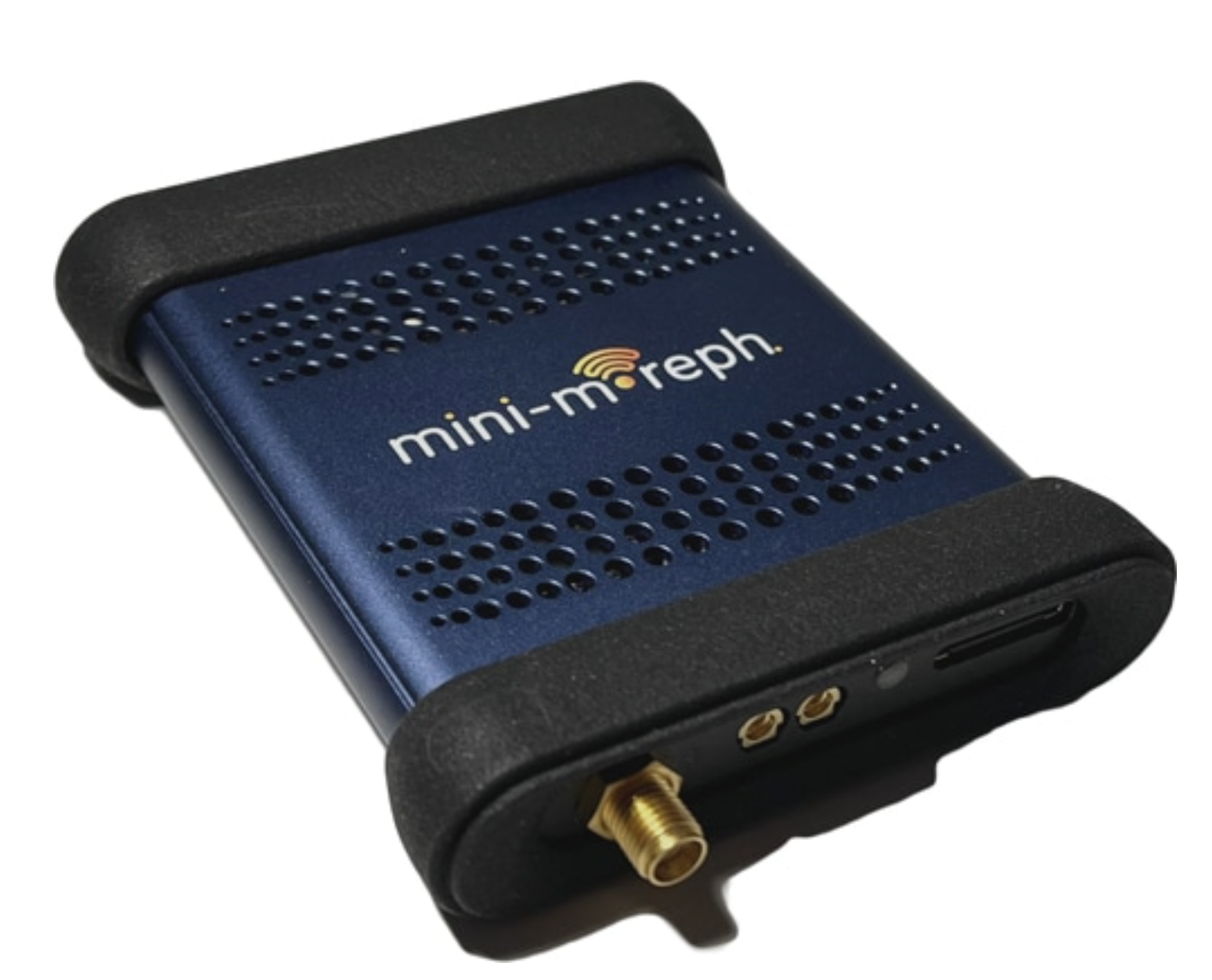
- The world’s smallest USB-powered wideband Protocol Analyzer.
- Price: starts at around $18,000 and goes up depending on added features.
- Pros:
- Very compact and portable (90 × 78 × 20 mm, only 110 g).
- SDR-based — supports BR/EDR, BLE, LE Audio, IEEE 802.15.4, and more.
- Supports the latest Bluetooth features, including Channel Sounding, T0 Timing for LE Audio, and LC3 Autodetect.
- Up to 16-channel logic analysis with configurable voltage threshold (blueSPY PRO option).
- True WiFi packet timing — monitors all 13 WiFi channels simultaneously for co-existence debugging.
- Autonomous captures via a connected Android phone app.
- Native cross-platform software (macOS, Linux, and Windows).
- Cons: Not affordable for many.
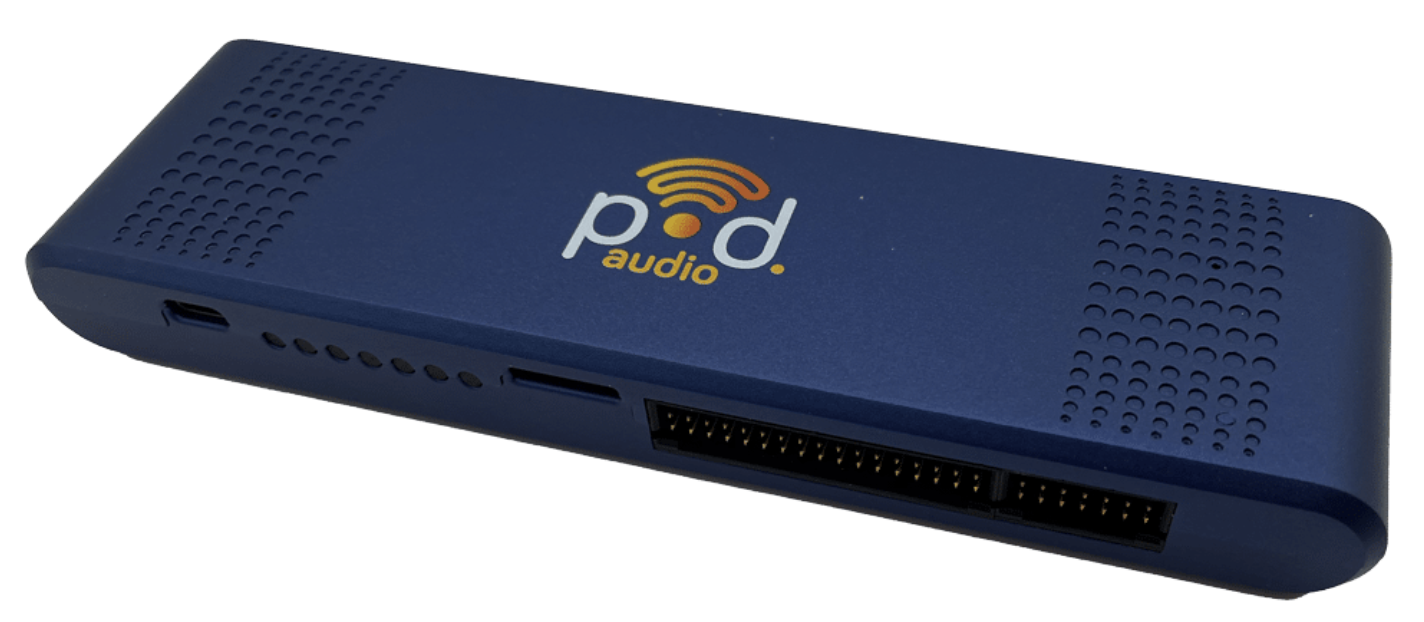
Works with audiopod™ — an industry-first audio measurement tool for LE Audio and Auracast™ products:
- Measure audio latency end-to-end, between channels, relative to on-air packets, and presentation delay.
- Current measurement with 8µs resolution and 13-bit precision.
2. RFcreations moreph30
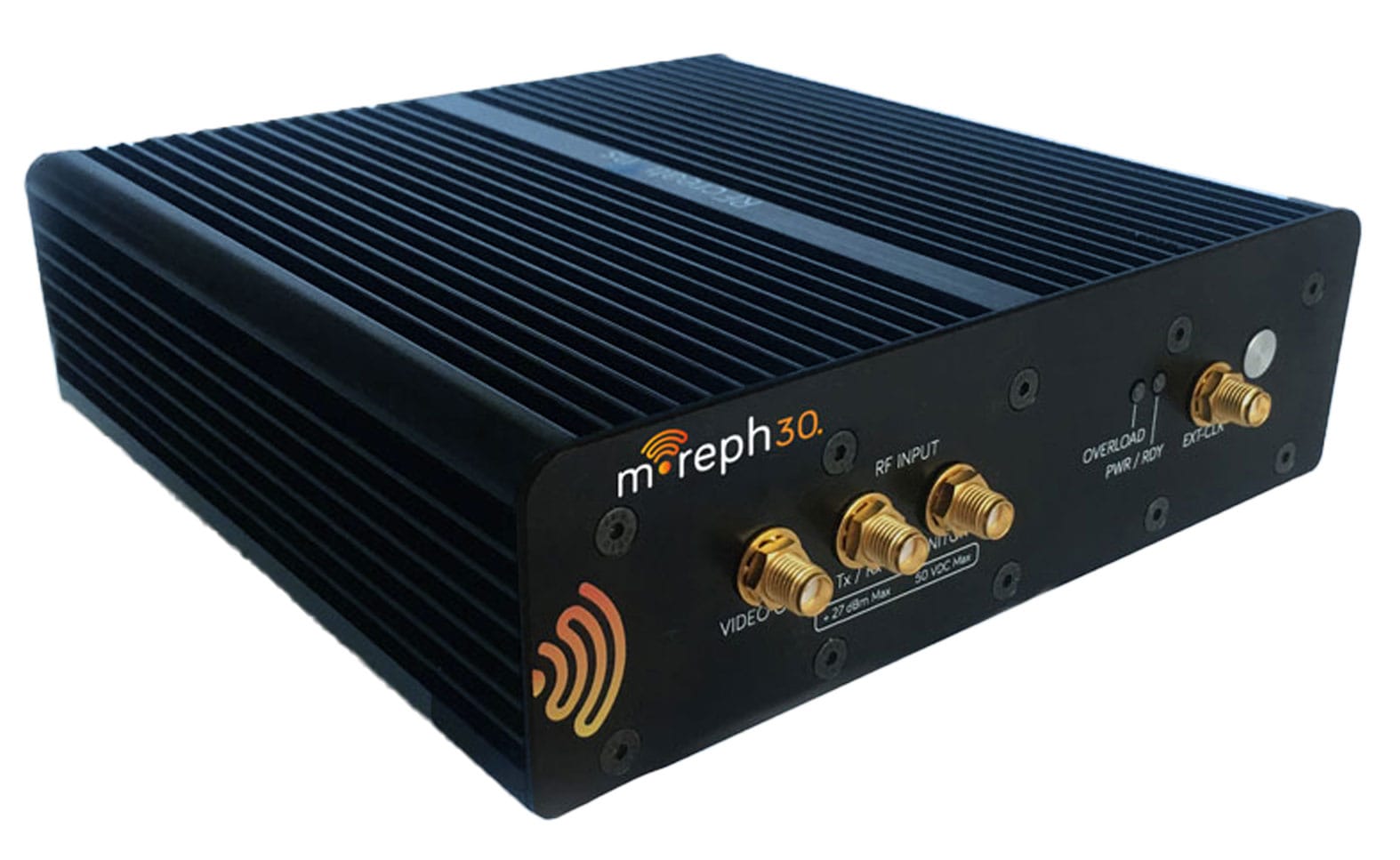
- Wideband 2.4 GHz signal analyzer and generator designed for PHY layer testing.
- Price: starts at around $23,000.
- Pros:
- SDR-based — supports BR/EDR, BLE, LE Audio, Channel Sounding, IEEE 802.15.4, and more.
- Supports all Bluetooth 6.0 RF-PHY test cases with no additional test equipment required.
- Built-in 6 GHz CW signal generator and ultra-linear RX/TX chain.
- USB + Ethernet interfaces for flexible connectivity.
- Expandable with morephE (RF record/playback) and CS-PHY Tester accessories.
- Native cross-platform software via blueSPY (macOS, Linux, and Windows).
- Cons: Larger and more expensive than mini-moreph; designed more for lab/PHY testing than portable field debugging.
3. Ellisys Bluetooth Tracker
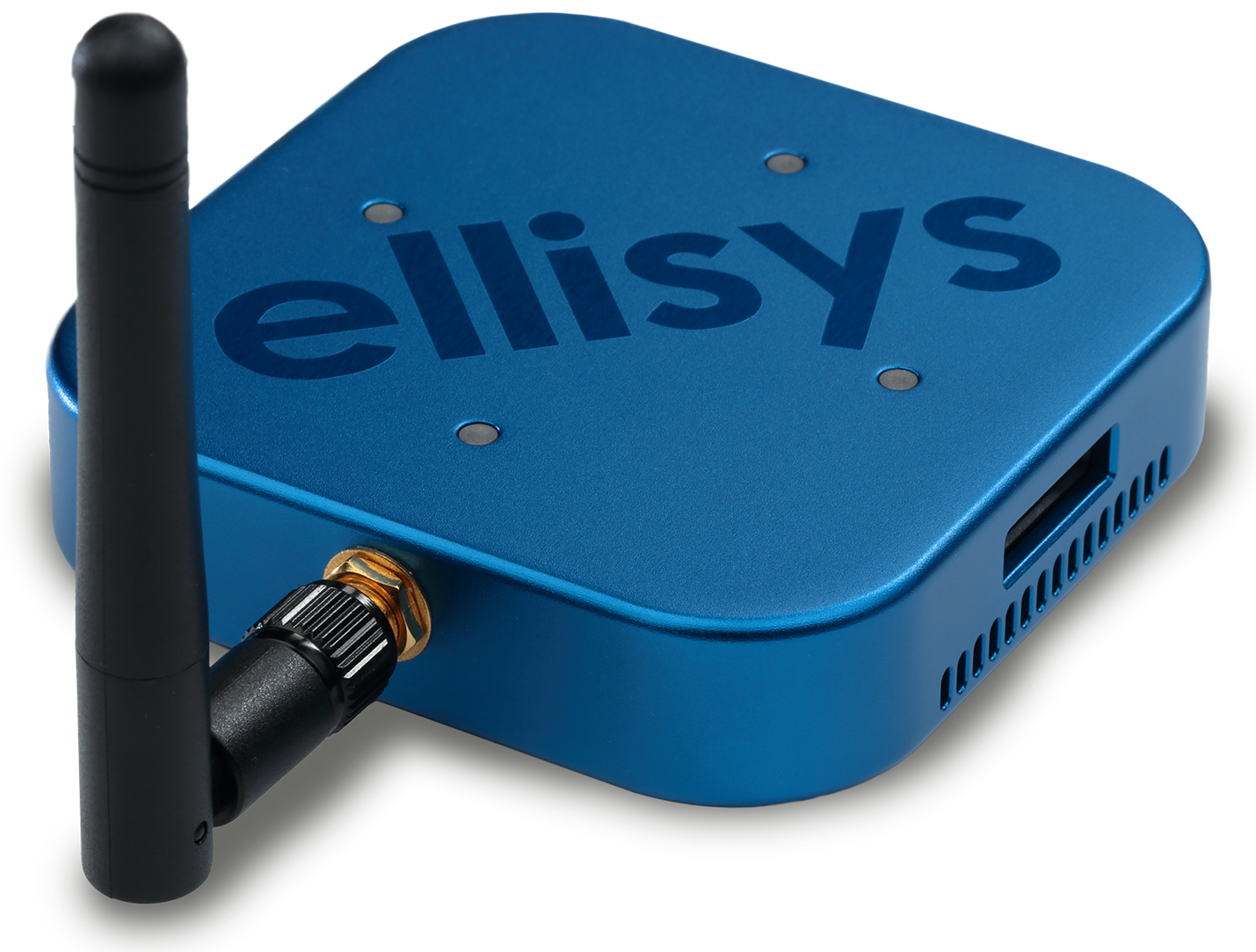
- Price: around $25,000.
- Pros:
- Very compact and portable
- SDR-based and supports the latest released version of Bluetooth Low Energy spec (BLE-only).
- Supports Wi-Fi and 802.15.4 technologies.
- Lower cost than other commercial sniffers.
- Easy-to-use PC Software
- Cons:
- Not affordable for many
- Does not support Classic or dual mode
- The software is Windows only (macOS available, but not a native app)
4. Texas Instruments BLE Sniffer (CC2540EMK-USB dongle)
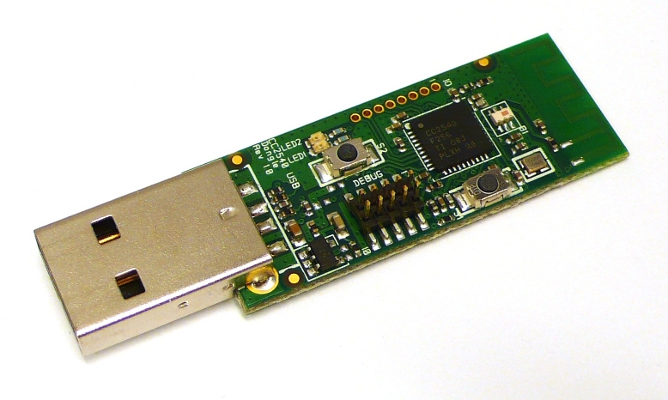
- Price: around $50.
- Pros: Relatively easy to use, reasonable cost, minimal setup required.
- Cons: can listen on only one advertising channel at a time (hardware limitation), uses proprietary analysis application, challenging to export captured data (need to develop/ or use a tool that parses the exported data), drops packets occasionally, crashes occasionally, only supports up to Bluetooth version 4.2.
5. Nordic nRF Sniffer (nRF51 PCA10031 USB dongle)
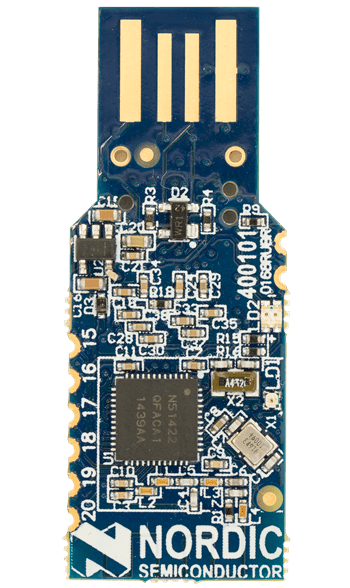
- Price: around $50.
- Pros: reasonable cost, integrates with Wireshark (Windows only) through the use of Nordic nRF Sniffer software (command line utility).
- Cons: can listen on only one advertising channel at a time (hardware limitation), requires a bit of setup, occasionally drops packets, and has no support for Bluetooth 5.0 and later versions.
6. Nordic nRF Sniffer (nRF52 PCA10059 USB dongle)
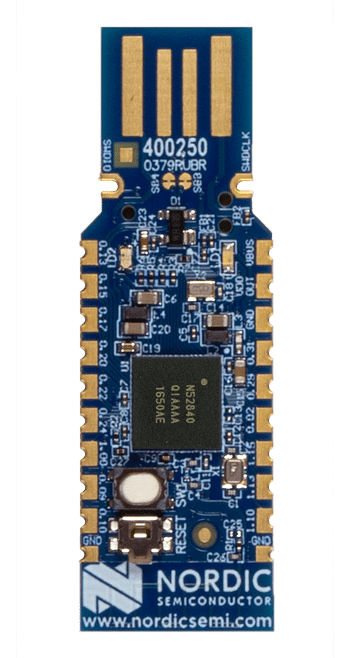
- Price: around $10.
- Pros: very low cost, fully supports Bluetooth 5 as a development kit, integrates with a full suite of applications from Nordic, the nRF Connect for desktop.
- Cons: can listen on only one advertising channel at a time (hardware limitation), requires a bit of setup, occasionally drops packets, and usually lags behind in terms of support for the latest Bluetooth Low Energy features.
- Here’s a Getting Started tutorial for this USB dongle: The nRF52840 USB Dongle Tutorial (Part 1)
7. Adafruit Bluefruit LE Sniffer
(pretty much the same as the nRF51 sniffer – based on the same chipset)
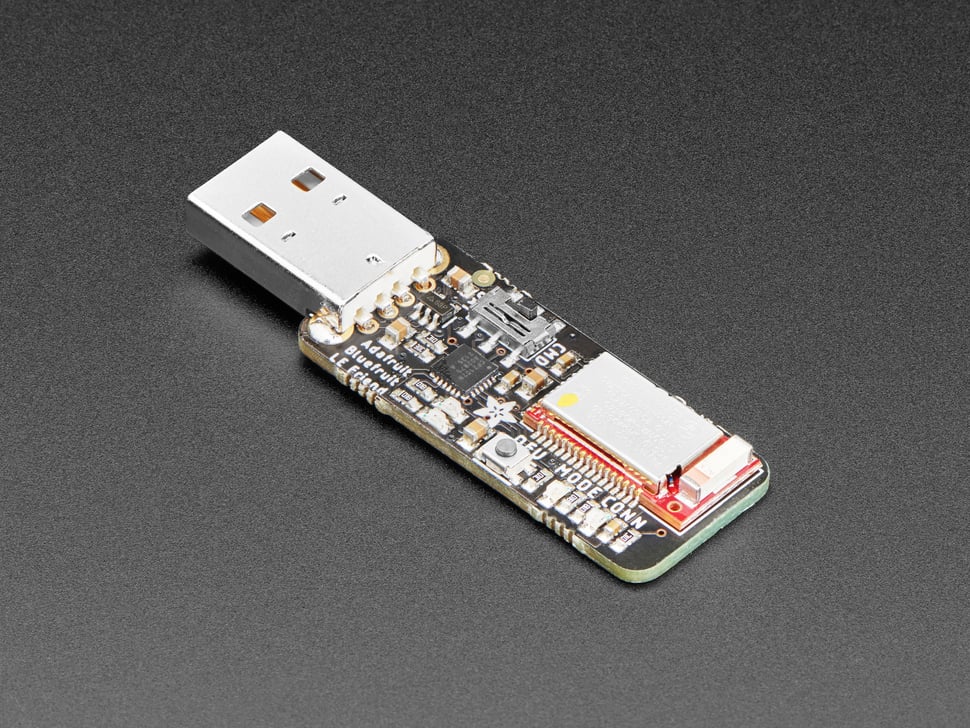
- Price: around $30.
- Pros: low cost, integrates with a full suite of applications from Nordic, the nRF Connect for Desktop.
- Cons: Does not support Bluetooth 5.0 and later, can listen on only one advertising channel at a time (hardware limitation), a bit of setup required, drops packets occasionally.
8. Ubertooth One
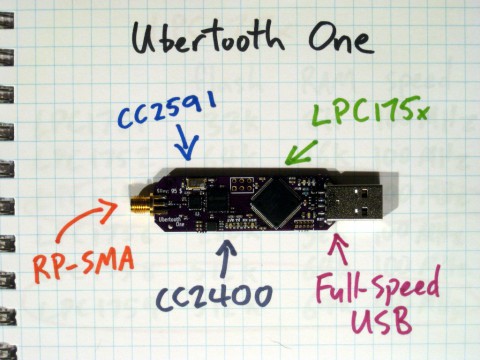
- Price: $125-$150.
- Pros: open-source software and hardware.
- Cons: can listen on only one advertising channel at a time (hardware limitation); difficult to get set up on Mac OS X or Windows (much simpler on Linux). Lags behind in terms of support for the latest Bluetooth spec versions.
9. Frontline (Teledyne Lecroy) ComProbe BPA low energy (deprecated)

- Price: $1,295.
- Pros: can listen in on all three advertising channels simultaneously, compact design, powerful PC software (almost overwhelmingly powerful).
- Cons: relatively pricey, Windows only, cumbersome UI (too many bells and whistles), minimal tutorials available, support for Bluetooth version 4.2 (BLE-only, no support for later versions).
- Note: this sniffer is a bit unique compared to the other sniffers in the list. It utilizes four BLE chipsets, three of them used to scan each of the primary advertising channels simultaneously (37, 38, and 39), and the fourth is used to follow a specific connection between two Bluetooth Low Energy devices.
10. Frontline X500TM Wireless Protocol Analyzer

- Price: $45,000+
- Pros:
- Employs Software Defined Radio (SDR), meaning the device’s firmware can be updated to support any future version of the Bluetooth spec.
- Captures Bluetooth (BR/EDR and Low Energy), Wi-Fi (Wi-Fi 5, 6, and 6e - including 6 GHz ISM band), and 802.15.4 technologies.
- Allows capturing data with a push of a button on the device without being connected to a PC
- Cons: very expensive, bulky, software is Windows-only.
11. Frontline X240TM Wireless Wideband Analyzer
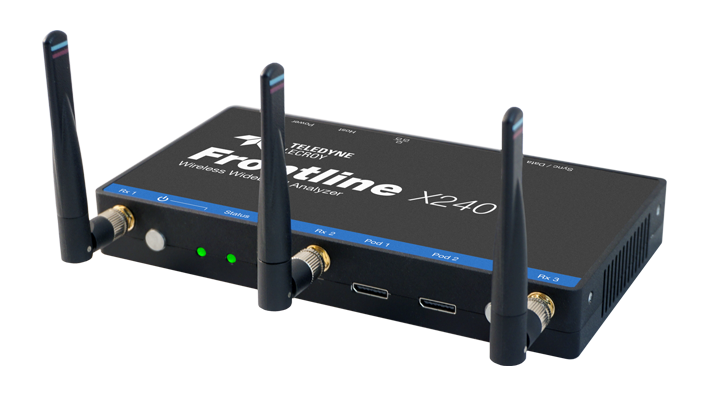
- Price: $30,000+
- Pros:
- Employs Software Defined Radio (SDR), meaning the device’s firmware can be updated to support any future version of the Bluetooth spec.
- Captures Bluetooth (BR/EDR and Classic), Wi-Fi (2.4 GHz only), and 802.15.4 technologies.
- Small footprint than similar offerings, lightweight.
- Allows capturing data with a push of a button on the device without being connected to a PC
- Cons: expensive, software is Windows-only.
12. Ellisys Bluetooth Explorer
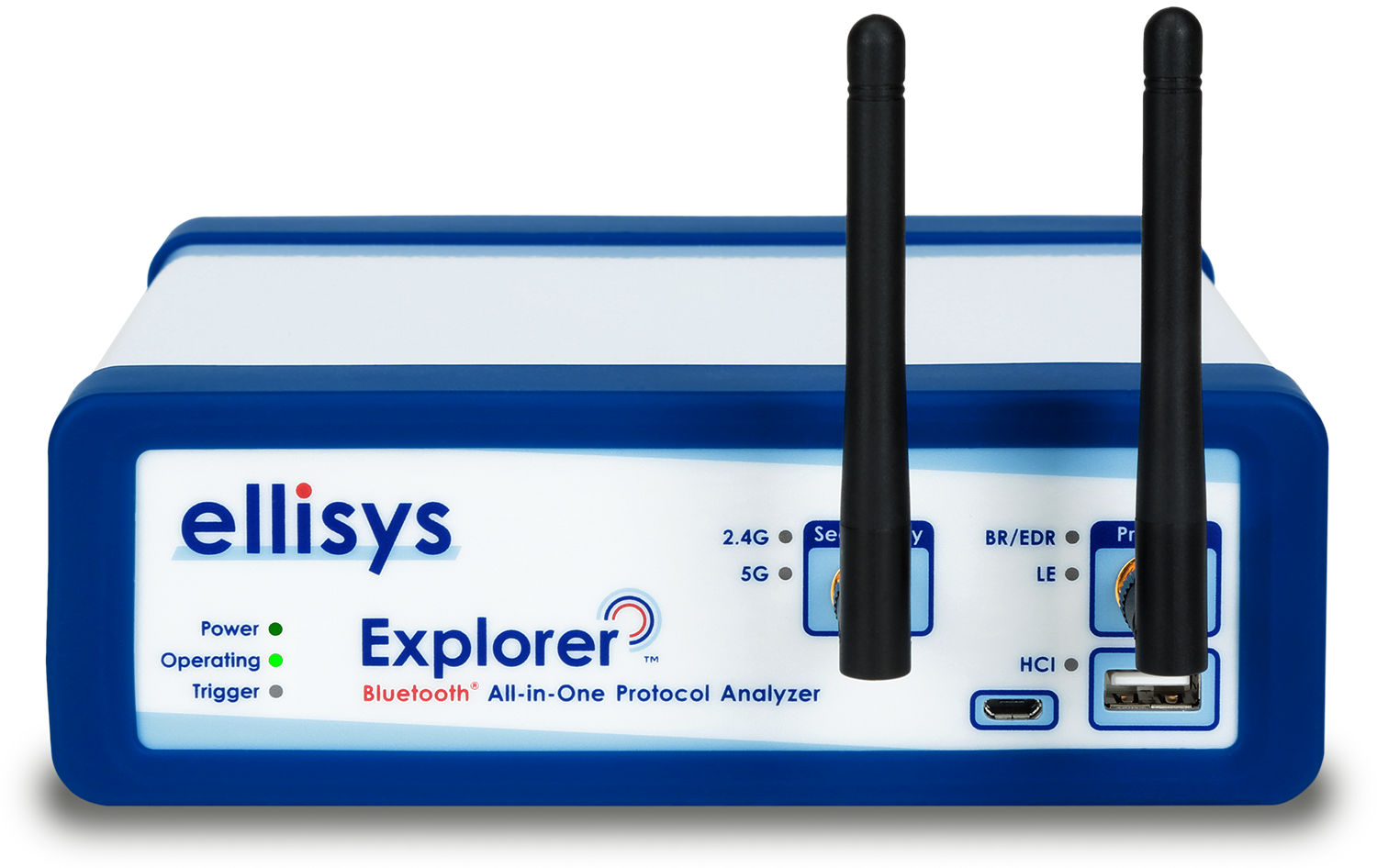
- Price: $30,000+.
- Pros:
- Employs Software Defined Radio (SDR), meaning the device’s firmware can be updated to support any future version of Bluetooth (BR/EDR and Low Energy).
- Captures Bluetooth (BR/EDR and Low Energy), Wi-Fi (2.4 GHz only), and 802.15.4 technologies.
- Easy-to-use PC Software.
- Cons: very expensive, bulky, software is Windows-only.
13. Ellisys Bluetooth Vanguard
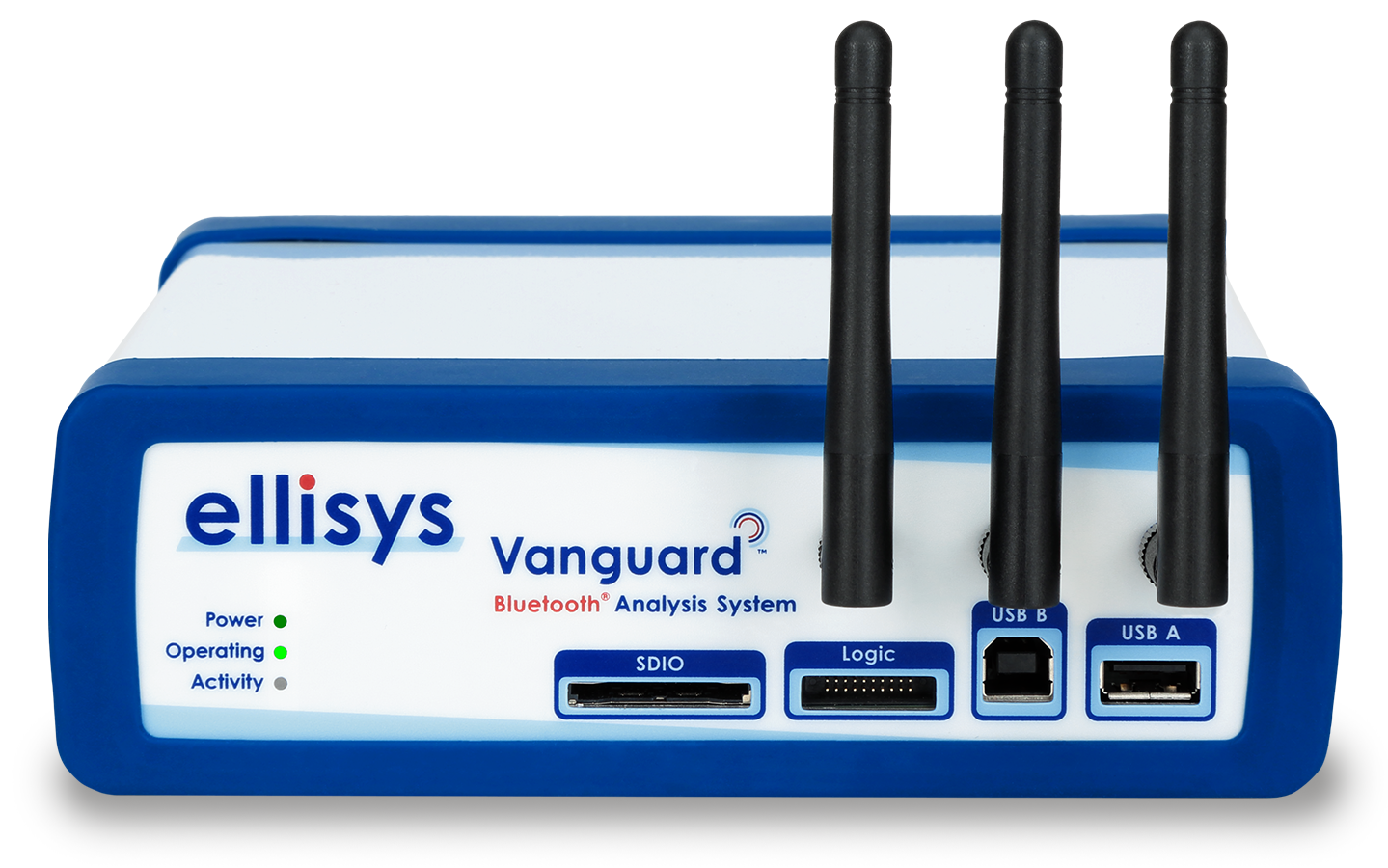
- Price: $50,000+
- Pros:
- Employs Software Defined Radio (SDR), meaning the device’s firmware can be updated to support any future version of Bluetooth (BR/EDR and Low Energy).
- Captures Bluetooth (BR/EDR and Low Energy), Wi-Fi (2.4 GHz only), and 802.15.4 technologies.
- Easy-to-use PC Software.
- Supports connection through Ethernet in addition to USB (allowing interfacing remotely).
- Cons: very expensive, bulky, software is Windows-only.
14. Spanalytics PANalyzr
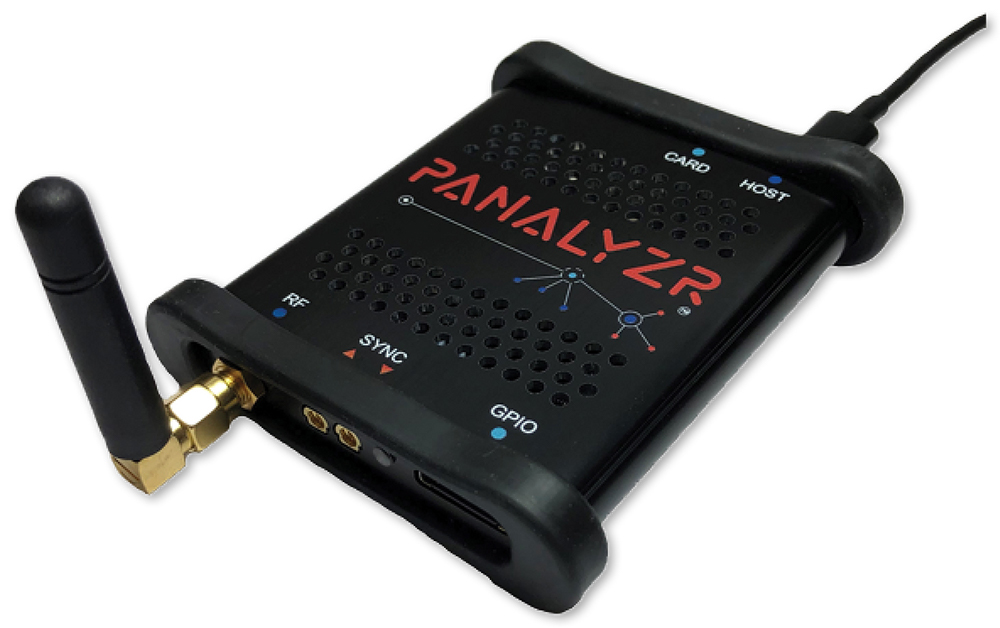
- Mid-tier Bluetooth protocol analyzer by Spanalytics.
- Price: $9,495
- Pros:
- Small form factor.
- Bluetooth (BR/EDR + BLE), Wi-Fi & 802.15.4 support.
- Optional Wireless Intrusion Detection System (WIDS) module.
- Integrates with Wireshark.
- Continuous updates for latest Bluetooth versions.
- Credit card payment option — no POs or invoicing needed.
- Cons: May not be affordable for some.
Development Companion
BleuIO: A Developer-Friendly Bluetooth LE USB Dongle
While a sniffer passively listens, BleuIO lets you actively control Bluetooth LE from your computer via simple AT commands. Generate test advertising traffic, scan for nearby devices, establish connections, and read GATT services — all from a terminal or script. A great companion to any sniffer setup.
Learn More About BleuIO →Conclusion & Recommendations
I hope that after reading this article, you've learned a lot about BLE sniffers (protocol analyzers) and that you now have a better understanding of how they work.
As you can see, the pricing of the different sniffers ranges dramatically between them. Here are a few recommendations depending on your budget and needs:
- The best sniffer in the list is the RFcreations mini-moreph
- Obviously, if you're just getting started with BLE development or you're on a budget, then you will have a limited number of options. In that scenario, I highly recommend the nRF52840 USB Dongle + nRF Sniffer option.
- If you are looking for a capable sniffer that can handle some of what the high-end sniffers (RFcreations, Ellisys, Frontline/Teledyne Lecroy) offer at a lower price, I recommend checking out the Spanalytics PANalyzr.
Keep an eye out for upcoming posts covering more on BLE sniffers, and be sure to subscribe to the newsletter to be notified when a new post gets published!
Frequently Asked Questions
What is the best Bluetooth LE sniffer for beginners?
The Nordic Semiconductor nRF52840 USB Dongle ($10) with nRF Sniffer software and Wireshark is the best starting point. It is inexpensive, portable, supports Bluetooth 5, and integrates with the industry-standard Wireshark packet analyzer. It does have limitations (single-channel sniffing, can miss packets), but it covers most learning and debugging scenarios.
Can a Bluetooth LE sniffer capture encrypted data?
A sniffer can capture encrypted packets, but decrypting them requires knowing the encryption keys. For development-kit-based sniffers like the nRF52840, you can input keys (LTK, IRK) in the Wireshark toolbar if you have them. Dedicated sniffers from vendors like Ellisys support capturing the pairing process to derive keys automatically.
What is the difference between a sniffer and a protocol analyzer?
The terms are often used interchangeably. Technically, a "sniffer" refers to the hardware that captures raw radio packets, while a "protocol analyzer" includes the software that decodes and presents the data. In practice, dedicated products (Ellisys, Frontline) bundle both into an integrated solution, while dev-kit solutions pair hardware (nRF52840) with separate software (Wireshark).
How many Bluetooth LE channels can a sniffer listen on at once?
Development-kit-based sniffers (nRF52840, CC2540) have a single radio and can only listen on one channel at a time — they hop between channels to approximate full coverage. Dedicated SDR-based sniffers (Ellisys, Teledyne, Frontline) can monitor all 40 channels simultaneously, capturing every packet without gaps.
BLE Sniffer Decision Matrix
Get our free PDF comparing 14 Bluetooth LE sniffers side by side — budget, professional, and enterprise tiers with prices, features, and recommendations.
No spam. Unsubscribe with one click.
Ready to Elevate Your Bluetooth Debugging?
Schedule a demo to see RFcreations professional sniffers in action and discuss your specific testing requirements.


